
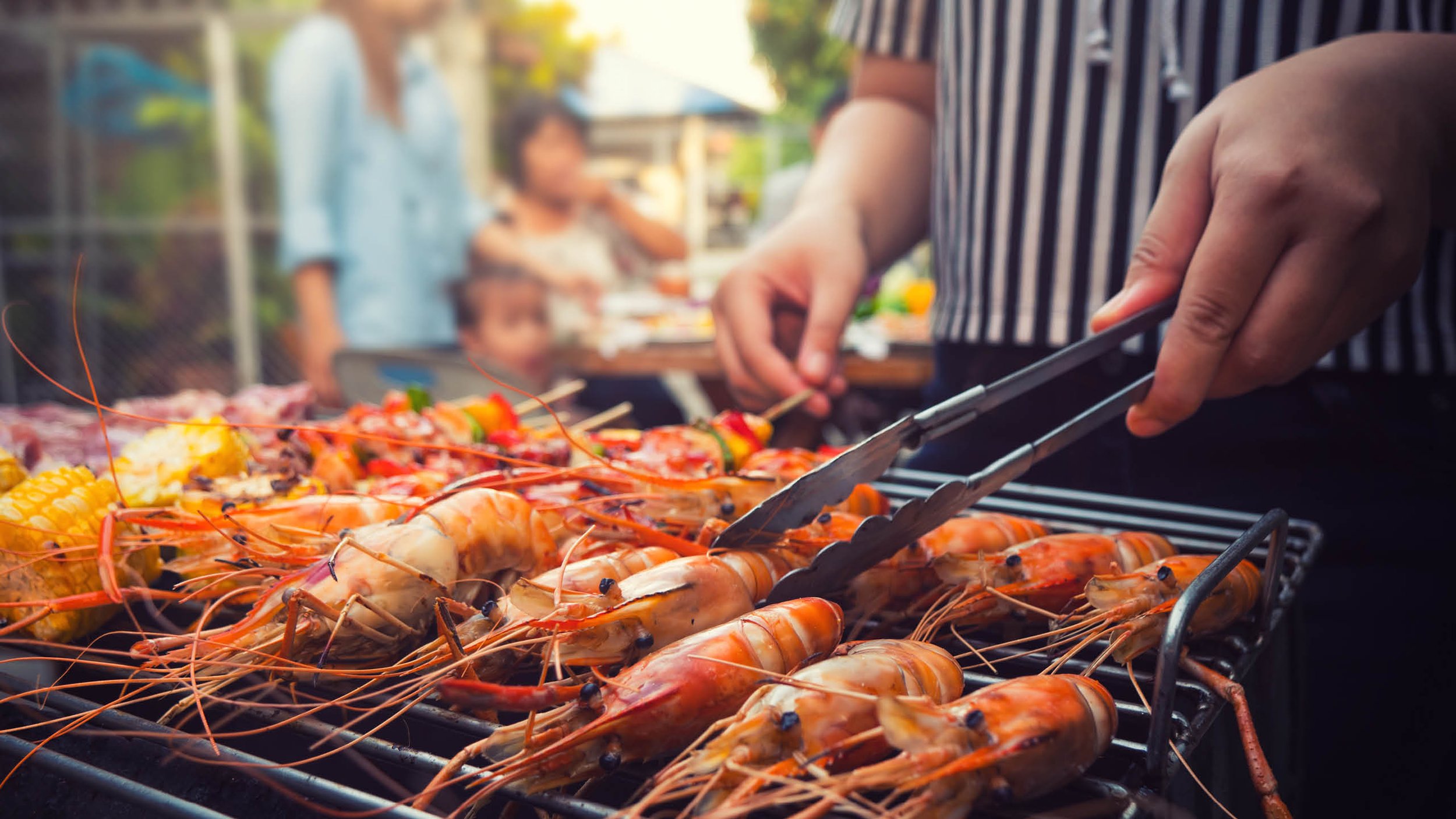
Forced Labour in the Seafood Industry
When you are enjoying a lovely piece of salmon or snapper, being locked on a boat with your identity and worldly possessions confiscated from you sounds like a pretty far-fetched situation.
Yet it is a story that is echoed constantly by people who have been tricked into forced labour on boats, working as fishers. Vito, a Cambodian farmer who was trafficked in the Thai fishing industry, said he ended up as “nothing, less than a ghost”, after being trapped on a fishing boat for over a year, never receiving his payment. Unfortunately, seafood caught by people like Vito can end up on our plates in Australia.
The careful purchase of seafood based on ethical and environmental considerations can reduce the risk of our seafood having been caught with forced labour. It just requires a little bit of education and mindful purchasing by consumers.

What types of seafood are best?
There are some types of seafood that are more responsible options for your table. This can come down to how the fish are caught in mass volumes, the natural abundance of the fish, or the ecological impact of the fishery on its local ecosystem. Good Fish has a helpful Sustainable Seafood guide for which seafood you think is the best choice, and which options to ‘say no’ to.
Seafood Certifications
When buying seafood, look out for certifications that signify effort to reduce environmental harm or the use of modern slavery in production.
-

Marine Stewardship Council
The MSC is a global, non-profit organisation which works with business and NGO partners to improve the health of the world’s oceans by transforming seafood markets towards sustainability.
Wild-caught seafood products that carry the MSC logo are:
• sourced from fisheries that are assessed and certified by independent, third parties against the MSC Fisheries Standard; and
• assessed against the MSC Chain of Custody Standard to ensure that these products are from MSC certified fisheries and are traceable and separated from non-certified products.
Find out more at
www.msc.org -
Aquaculture Stewardship Council
An independent, international non-profit organisation that manages the world’s leading certification and labelling program for responsible aquaculture.
The standards are underpinned by ISEAL Alliance and UN Food and Agriculture Organization.
ASC is one of the certification used by Australian supermarkets for farmed seafood products.
Find out more at
www.asc-aqua.org -

Best Aquaculture Practices
BAP ensures aquaculture is done responsibly through its third-party certification program. BAP a seafood-specific certification program that is capable of certifying every step in the production chain.
Certified bodies must pass tests on:
The quality of goods produced
Food safety management
Verification and accuracy of internal testing
Social accountability (including modern slavery)
Employee health and safety
Environmental and waste management
Animal welfare (for the farm raised species)
Traceability
Find out more at www.bapcertification.org
-

GGN
The GGN label is a cross-category consumer label that stands for certified, responsible farming and transparency and found on farmed seafood, fruit and vegetables, flowers and plants.
For farmed seafood, the GGN label is applicable to a variety of aquatic species – from salmon to seaweed. It’s available in stores on both packaged products and at the fresh fish counter. Labeled products come from production processes certified to GLOBALG.A.P. standards for responsible aquaculture.
Find out more at
www.globalgap.org & www.ggn.org
Spotlight on MSC
A submission from the Seafood Working Group


The Seafood Working Group (SWC) undertook an investigation into the MSC certification and the connection it has to labour rights.
The SWC has a series of concerns and recommendations regarding improving human rights under the MSC certification programme.
Three key concerns are that:
The human rights due diligence used are unverified self-reports from companies
This means that the reports can be falsified to misrepresent working and living conditions aboard the vessels.Fishery-level audits are not representative of the industry
Audits are undertaken at government level, which means the intricacies of issues found at vessel-level are likely missed.MSC continues certification of vessels using forced labour
Currently, only vessels convicted of using forced labour are stood down, not those under investigation or those with clear signs of human rights abuses.

Country of origin
While buying seafood with responsible certification is best, it’s important to know where your seafood comes from. If you’re shopping for seafood that does not have certifications country of origin becomes important.
Look for:
Generally, seafood from North America, Europe, Australia and New Zealand will be subject to stricter environmental and human rights regulations.
Countries such as Thailand, Vietnam and China which are known to have fisheries that may not comply with international standards.
Norway and Iceland, are held as the gold standard of seafood production.

Where to buy seafood from
There is not a big difference between buying seafood from a supermarket and a fishmonger in terms of sustainability and modern slavery. A supermarket is more likely to have partnered with certifications such as MSC in order to very clearly show that its product has attempted to be sustainable. A fishmonger is more likely to have sourced fresh and local seafood, meaning that the supply chains are more easily traceable, and emissions in the transport of the fish are reduced, which could make it a better choice for people and the planet.
If you are shopping at an Australian Supermarket this Christmas, use our guide below to check what to look for to make more responsible choices.
Supermarket Seafood Shopping Guide

Woolworths Modern Slavery Statement
Woolworths Responsible Sourcing Policy
Keep and eye out for these logos at Woolworths

Woolworths has committed to sourcing seafood from sources that are third-party certified or independently verified as environmentally responsible. 100% of Woolworths’ Own Brand Seafood seafood suppliers are covered by their Responsible Sourcing Program and their fisheries are covered by an approved accreditation.
Woolworths branded seafood is
Wild-caught seafood :
MSC certified; or
meets Woolworths Seafood Sourcing Policy
Farmed seafood products:
Aquaculture Stewardship Council (ASC);
Best Aquaculture Practices (BAP);
GLOBALG.A.P; or
meets Woolworths Seafood Sourcing Policy

Coles Responsible Sourcing Policy
Coles Modern Slavery Statement
Keep and eye out for these logos at COLES

Since 2015, all Coles Own Brand seafood complies meets Coles’ Responsibly Sourced Seafood Program. This includes fresh, thawed, frozen and canned seafood and food products that contain seafood as a primary ingredient.
To meet Coles’ Responsibly Sourced Seafood Requirements, Coles Own Brand products are required to be:
Wild-caught seafood :
MSC certified; or
Independently assessed as meeting the Coles Wild Seafood Assessment Framework
Farmed seafood products:
ASC certified;
Best Aquaculture Practices (BAP);
Farmed seafood products assessed against BAP or GLOBALG.A.P carry the Coles' Responsibly Sourced Seafood (RSS) logo. The ASC or Coles Responsibly Sourced seafood logo indicates that the product has come from an independently certified farm. More information on these standards can be found on their respective websites.
Coles was recognised as a trailblazer at MSC’s 2023 Sustainable Seafood Awards, for being the first and only Australian retailer with MSC Chain of Custody certification for seafood sold at our deli counters.
ALDI Fish and Seafood Sourcing Policy
ALDI Modern Slavery Statement
Keep an eye out for these logos at ALDI
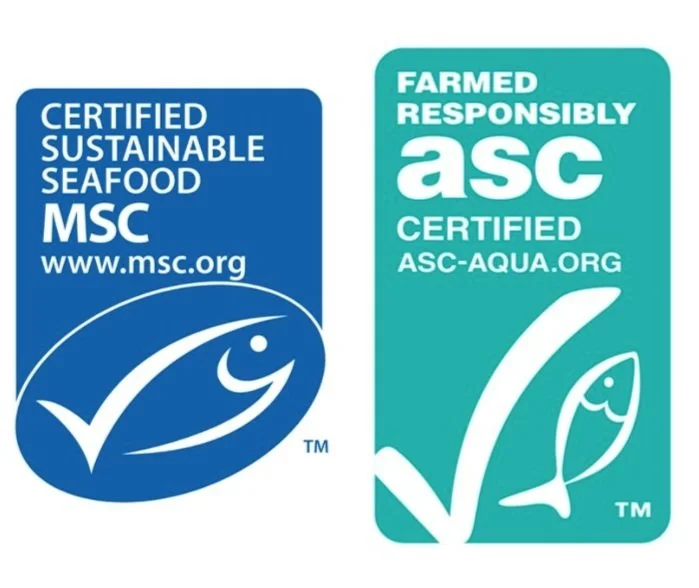
ALDI works closely with independent third-party certification schemes to improve the traceability of our products and support responsible sourcing practices.
All ALDI’s branded fish and seafood products are either:
For wild caught seafood: MSC certified or meets ALDI’s Fish and Seafood Sourcing Policy.
For farmed seafood: ASC certified, Best Aquauculture Practices (BAP), Global G.A.P or meets ALDI’s Fish and Seafood Sourcing Policy.
ALDI was awarded ASC’s Best Responsible Seafood Retailer for the third year running in 2025.
Transparency
ALDI has disclosed their seafood sourcing through a public profile on the Ocean Disclosure Project website. The profile lists all the fisheries supplying ALDI’s wild caught seafood, along with information on the fishery management, catch method, and environmental impact.
Worker Voice
ALDI with the support of the human rights focused Issara Institute, rolled out a grievance mechanism with production facilities in Thailand to strengthen the voice of workers and ultimately improve their working conditions.

** IGA is a brand owned by Metcash **
All Metcash private label seafood is responsibly sourced, including our Community Co and Black and Gold frozen and canned seafood products. Private label seafood lines are certified by either:
Marine Stewardship Council
Aquaculture Stewardship Council
GLOBAL GAP or
Best Aquaculture Practices.
A HUGE win for Australian Seafood
In 2022, the Albanese government committed to implementing country of origin labeling. Now in 2023, we have a government that has updated regulations for CoOL (country of original labelling) and will introduce the regulations in 2025!
Be Slavery Free have been advocating for greater transparency in seafood for over a decade. Thousands of you signed the petitions over the years demanding forced labour free seafood choices - through tracing and labelling for Australians.
Now, we have taken a huge step forward. With CoOL introduced, it will be easier to make an informed choice as an individual in restaurants and hospitality venues.

Recipes
Whether it’s for Christmas lunch, or just summer cooking, enjoy your responsible choices by cooking up some of these great seafood recipes created by our Co-founder, Fuzz Kitto.
-
![]()
Prawn Scallop Mango Salad
-
![]()
Prawn Pad Thai
-
![]()
Seafood Ceviche
-
![]()
Prawn Laksa
-
![]()
Seafood Pie
-
![]()
Squid Skewers
-
![]()
Seafood Pasta
-
![]()
Prawn & Bacon Burger


